Weekly Review:
April 19–25, 2026

Weekly Review:
April 19–25, 2026
Weekly Review:
April 19–25, 2026
Weekly Review:
April 19–25, 2026
Weekly Review:
April 19–25, 2026
Weekly Review:
April 19–25, 2026


Summary
“In its 78th year, an incident occurred in the State of Israel reminiscent of the shaving of beards, sidelocks, and the humiliation of prayer shawls and tefillin in late-1930s Germany,” wrote Iris Leal in Haaretz. A seemingly minor incident in the city of Modi’in, handled with crudeness and ignorance by Ben-Gvir’s police, led the author—as well as the newspaper’s editorial article titled “The Kippah Police”—to treat the event as symbolic of Israel in the days of Netanyahu.
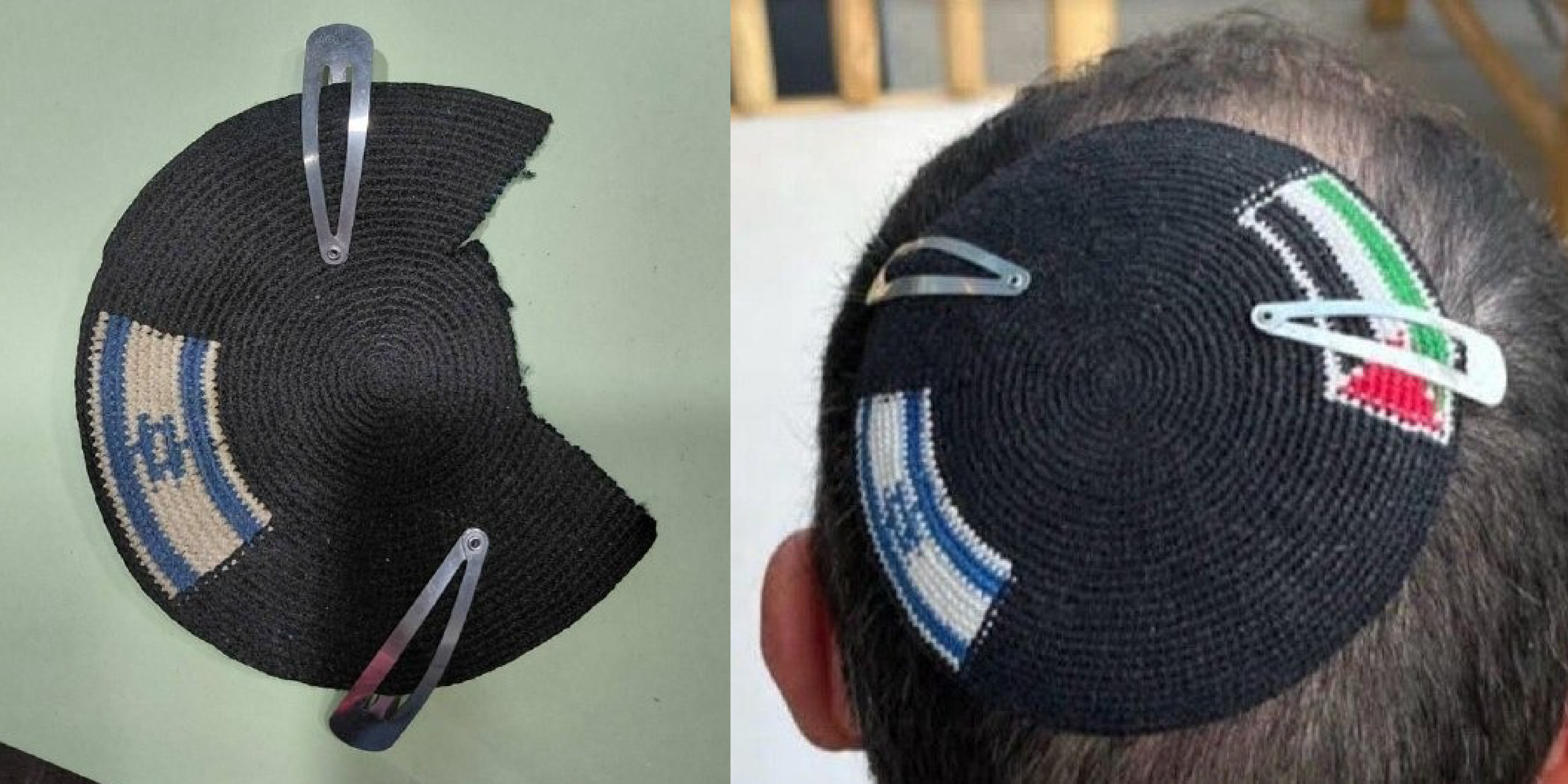
In short: A lecturer wearing a kippah embroidered with Israeli and Palestinian flags sat in a café. A passerby called law enforcement, and without any discretion, two uniformed officers arrived and informed the lecturer that his kippah violated the law.
Of course, there is no legal prohibition against publicly displaying the Palestinian flag (recall photographs of Netanyahu with that flag displayed nearby), nor is it “incitement,” but rather an expression of a yearning for peace between the two peoples. Yet Ben-Gvir’s police have been thoroughly indoctrinated, and so the kippah-wearing man was taken to the police station, placed in a holding cell, interrogated, and ultimately released for lack of grounds. His kippah was returned to him—with the Palestinian flag cut off. Does that remind you of 1938?
Meanwhile, another headline reports that responsibility for enforcement in Areas A and B of the occupied West Bank will be transferred to the Border Police in the West Bank, operating under Central Army Command. The reasoning: Border Police soldiers will replace IDF soldiers who are not trained in arresting Israeli civilians. Ostensibly, this move is intended to curb Israeli settler terror, but a broader look suggests that these forces, loyal to Ben-Gvir’s doctrine, have often demonstrated their capabilities against Israeli protesters and Palestinian residents.
________________________________________
Sunday – Settlers attacked at night in Turmus. They arrived in more than a dozen cars, burned one house and one vehicle on the edge of the village. Several additional homes were stoned. A military force stationed near the outpost in the Turmus area did not intervene, allowing the attackers to continue unhindered. The village lies northeast of Ramallah, near Khirbet Abu Falah and al-Mughayyir, which had also been attacked earlier that day.
Monday – In Khirbet a-Tawil, where activists from “Looking the Occupation in the Eye” maintain a protective presence, settler attacks continued. A settler riding an ATV sped toward a resident, stopped, and attacked him with a sickle he grabbed from his hand. Another Palestinian tractor driver was attacked by settlers on a second ATV, and a local youth was injured.
Tuesday – At Emil Greenzweig Square in Jerusalem, on the eve of Independence Day, an alternative torch-lighting ceremony for a just and equal Israel was held by the “Yesh Gvul” organization. Sigal Harari Shukrun, a member of “Looking the Occupation in the Eye,” lit a torch at the event, held for the 25th year, along with 11 other human rights activists.
The Palestinian Red Crescent reported two fatalities and four injuries from settler gunfire in the village of al-Mughayyir. Footage from the scene shows the shooting occurred near the village school. A 13-year-old boy was killed (his father had been shot dead by a settler seven years earlier), and another man, aged 38, was also killed. The IDF stated that stones were thrown at an Israeli vehicle and that a reservist soldier fired toward villagers. Footage suggests a settler attack and deliberate shooting unrelated to the alleged vehicle incident.
Wednesday – Ouda Ataf Ouda, 29, was shot dead by a settler in Deir Dibwan, east of Ramallah. The shooter was one of four Israelis who entered the town and clashed with residents.
Thursday – In Nablus, soldiers shot and killed 16-year-old Yusuf Sameh Ishtiya during an army raid. The IDF said he threw stones and that forces followed arrest procedures before opening fire.
Settlers attacked farmers from the village of Deir Istiya; the army, as usual, arrested six Palestinians.
Masked settlers attacked a family home in Beit Ommar, burned vehicles, and attempted to set the house on fire with its occupants inside. Eight family members suffered smoke inhalation. The army arrived after the attackers fled: “We strongly condemn; an investigation has been opened.”
Friday – Activists returned to Za’atara Junction (Tapuach) for their weekly presence demonstration calling to end the occupation and settler violence.
Saturday – Settlers entered homes in Duma, home to members of the Jahalin community, refugees from Rashaash. The attackers, arriving in Ranger vehicles, assaulted residents including children and vandalized cars. Police arrived and observed while residents hid in their homes; others threw stones in self-defense. One settler was injured. Afterward, police arrested a human rights activist who had not been present during the attack.
Despite a long-term closed military zone order imposed on the outskirts of Duma, settlers from nearby outposts have repeatedly been documented inside residential areas.
Masked settlers attacked a family home in Qusra, attempting to set it on fire while the family was inside. The IDF confirmed damage to gas equipment and cameras: “The matter has been transferred to the Israel Police.”
Noam Jackson from a nearby outpost, accompanied mostly by minors, entered a Palestinian residential compound in Khirbet a-Tawil and stayed for hours. Activists from “Looking the Occupation in the Eye” stood opposite them.
________________________________________
Document
From a post by human rights activist Yotam Yaakovson:
Another weekend of protective presence against Jewish terror that continues to intensify. Again in Khirbet a-Tawil, a small cluster of homes east of Aqraba, whose residents—like others—have recently become targets of relentless harassment by settlers from nearby farms. The fields are still green, full of delicate colors of thistles and wild plants—a reminder of how beautiful and how painful this land is.
Today, on the Sabbath, a group of rioters came to rural homes to harass, hurt, intimidate, and abuse. Why? Because they see themselves as “masters of the land.”
Apparently, to these “holy Jews,” a shepherd boy, an elderly man washing before prayer, or a woman making cheese pose an existential threat. Otherwise, how can one explain their actions—violating Sabbath laws, driving, carrying equipment, using phones, trespassing, and desecrating the sanctity of the day?
Dressed in white shirts, wearing sidelocks and prayer shawls, they circled homes freely, entered them, spat, cursed, and tried to steal property. Two armed men later arrived, sending minors first. A boy stood frozen at his doorway, holding a stick, trembling with fear. Had I not approached him, he might have reacted—and likely been shot or arrested for “assault,” which would in fact have been self-defense.
Calls to the army and police went unanswered, even after activists were beaten. At one point, we heard a dispatcher say: “They’re anarchists.” Us?
This quiet pastoral area is becoming a place of ongoing trauma. Eight of the eighteen families have already left. The rest remain, insisting on staying on their land. We maintain a constant presence to try to prevent or at least reduce attacks.
On the eve of Holocaust Remembrance Day, settlers demanded a family leave by noon the next day. They circled the house all night. The family left, moved to another house. Shortly after, the same settler threatened: “Within 7–10 days we’ll drive you out from here too.”
Pressure continues to rise. Livestock feed left behind was deliberately consumed by settlers’ cattle. At night, vehicles roam constantly. Construction continues in nearby outposts without permits. Water is taken from Palestinian sources.
Recent incidents include a young shepherd severely beaten and an older man whose hand was badly cut with a sickle. These are considered “minor” compared to others happening constantly—day and night—and rarely reported.


