


Summary
Ras Ein al-Auja, the village where 120 families once lived, has been erased. The remnants of sheep pens and structures that remain symbolize what can be described as the victory of ethnic cleansing, alongside herds belonging to settlers from illegal outposts who now enjoy the winter greenery of the Jordan Valley.
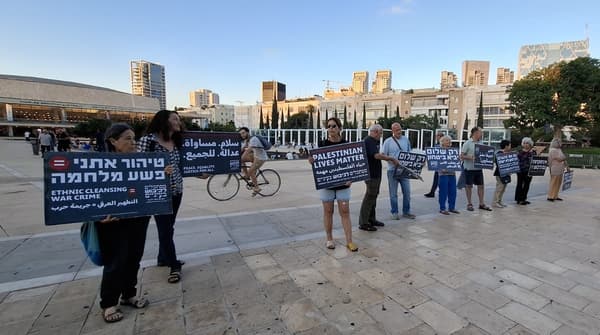
“The ethnic cleansing does not stop,” and it has received state backing. During the past week, Bezalel Smotrich celebrated: “A historic day for settlements in Judea and Samaria: the Political-Security Cabinet approved a series of dramatic decisions fundamentally changing the legal and civil reality in the area.”
These refer to a series of decisions adopted by the Political-Security Cabinet at the beginning of last week, intended, among other things, to allow Jews to purchase land throughout the West Bank, including in Area A. To this end, the Cabinet annulled the Jordanian law prohibiting the sale of land to Jews. Another strategic decision was the renewal of the Land Purchase Committee. This mechanism, which ceased operating about 20 years ago, will now be reinstated and will enable the State of Israel to proactively purchase land in Judea and Samaria—a step intended to secure land reserves for future settlement. The implication is that lands previously under the supervision of the Palestinian Authority or privately owned would become Israeli government property. It is therefore unsurprising that the Palestinian Authority views the approved measures in Areas A and B as effectively killing the Oslo Accords.
“There is a simple admission hidden there—that the word of the State of Israel is not worth the paper it is written on. It turns out that a formal signature on an international agreement is worth even less than Netanyahu’s word,” wrote Zehava Galon in Haaretz.
________________________________________
Sunday
The Political-Security Cabinet adopted decisions regarding land in the occupied west bank. Among other measures, it was decided to transfer planning and construction licensing authority in the Jewish settlement in Hebron, at the Cave of the Patriarchs, and at other holy sites in the city directly to the Civil Administration’s planning institutions. The Rachel’s Tomb compound will also be upgraded: the Cabinet approved the establishment of a dedicated municipal administration for the site, responsible for cleaning, waste removal, landscaping, and ongoing maintenance. It was also decided to expand supervision and enforcement activities into Areas A and B regarding water offenses, damage to archaeological sites, and environmental hazards affecting the entire region.
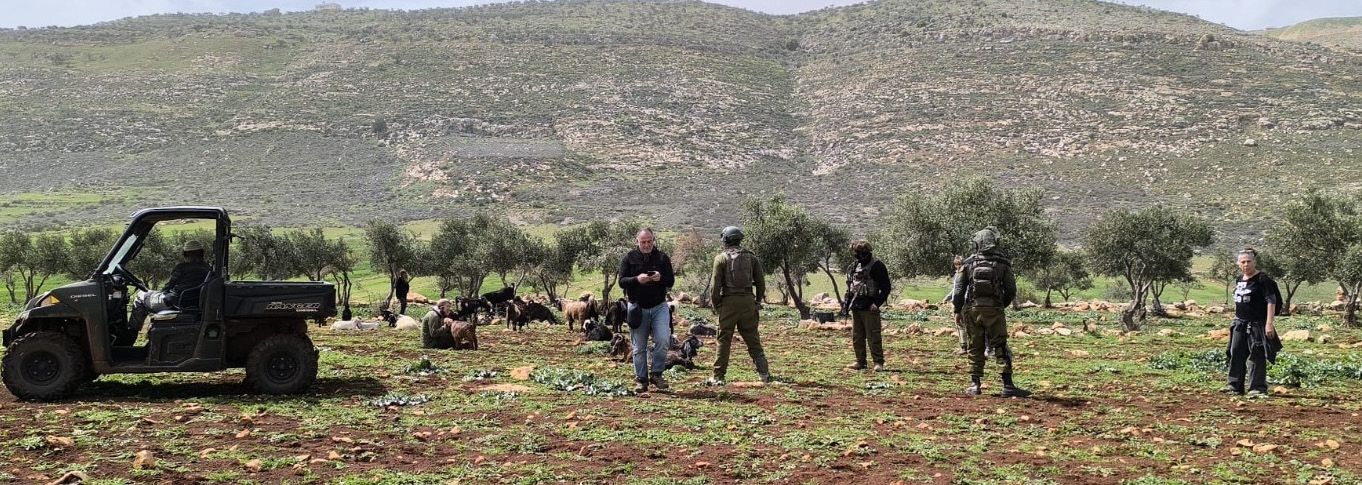
On the outskirts of Fasayil, activists from “Looking the Occupation in the Eye” cleaned the area at the entrance to Abd’s home and moved a pile of rotten dates that settlers had dumped there away from the house. When settlers arrived with their herd of cows, the cows—true to their nature—went to the relocated pile and refused their handlers’ attempts to steer them toward Abd’s home.
Tuesday
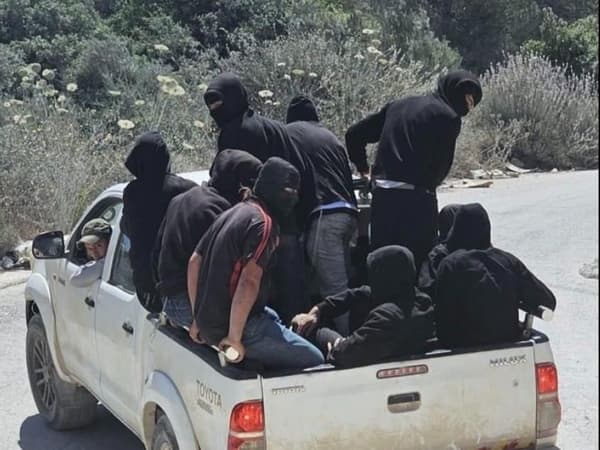
Settlers used heavy engineering equipment destroyed nearly 20 Palestinian residential structures on the outskirts of Jericho, in the a-Diyu a-Tahta neighborhood in an area known as “Hasmonean Palaces” in Area C. The demolition lasted many hours, during which several residents were beaten—all without intervention by law enforcement authorities. The IDF condemned the act.
Wednesday
The army and the Civil Administration issued an order prohibiting the construction of a fence that settlers had sought to erect on the outskirts of Fasayil. That night, settlers attacked Palestinian homes in Duma.
Thursday
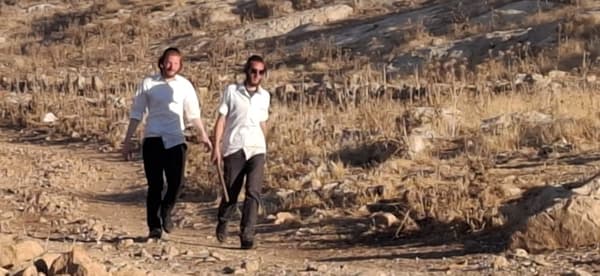
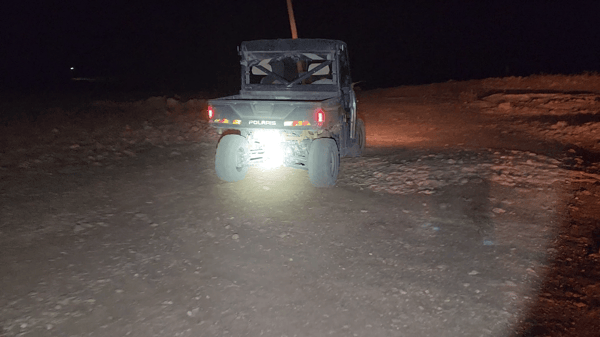
A herd of cows accompanied by four settlers entered Abd’s yard in Fasayil, but the cows reverted to their previous behavior, refused to enter the yard, and grazed near the relocated pile of dates. The settlers entered the yard with an ATV, donned tefillin, and held a picnic. Later that day, they drove stakes and metal posts into the ground at the entrance to the compound and added fencing in violation of the general’s order prohibiting the construction of a fence. The army and police dragged their feet and did nothing.
Friday
Settlers blocked Palestinians from accessing the waterslide in Wadi Auja.
The investigation file regarding the violent attack 3 months ago by settlers against Oded Yedaya was closed. During the attack, they caused him a fractured jaw, heavy bleeding, and loss of consciousness. Yedaya, 77, was assaulted while assisting Palestinians with the olive harvest in the Nablus area. Police stated that they were unable to locate the settler attackers. Yedaya was not summoned to give testimony. The police said intelligence investigative actions had been carried out, but to no avail. Yedaya told Ynet: “The footage of the attack shocked the entire country; it seems to have shocked the police less.”