The Return of
“Managing the Conflict"

The Return of
“Managing the Conflict"
The Return of
“Managing the Conflict"
The Return of
“Managing the Conflict"
The Return of
“Managing the Conflict"
The Return of
“Managing the Conflict"


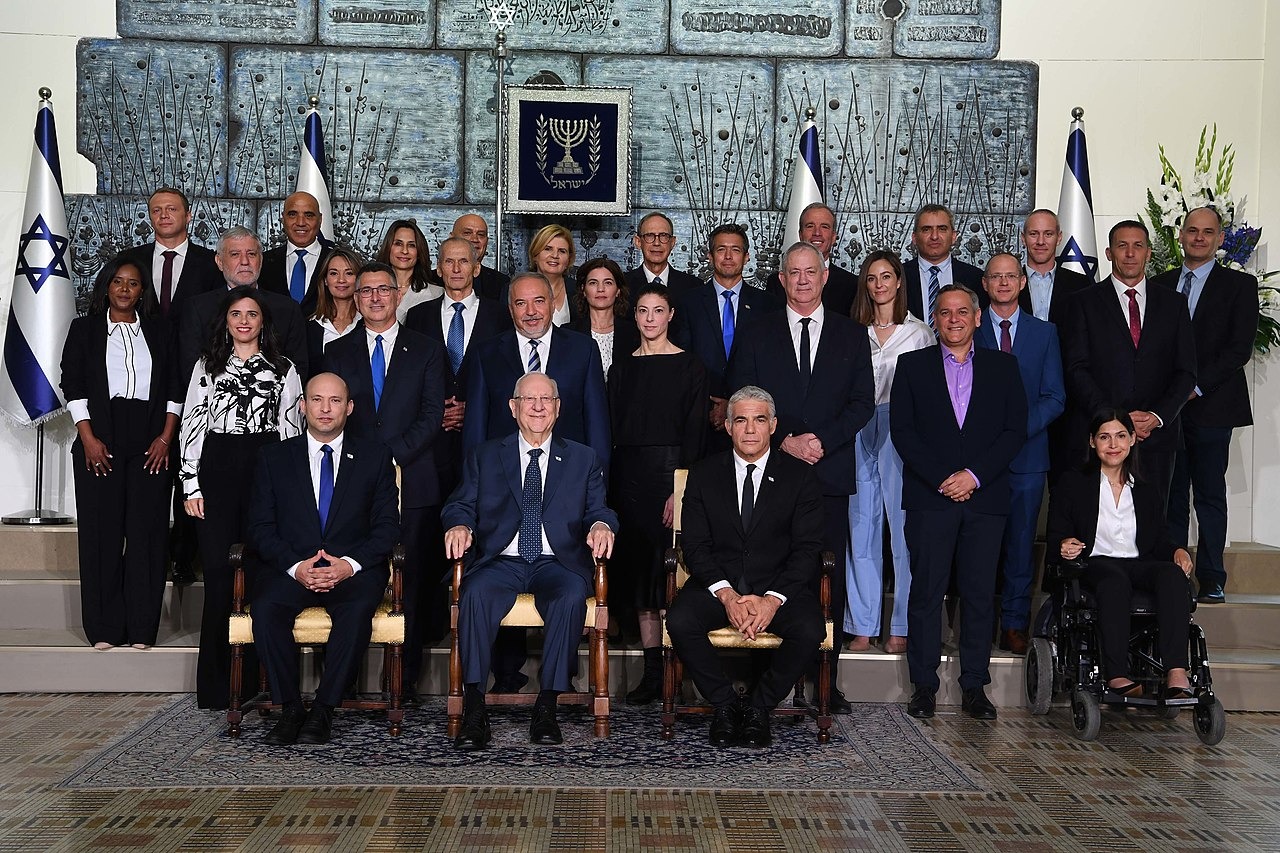
The only chance of winning the elections, as Sefi Rachlevsky explains well (for example in his podcast with Moshe Radman), is the dominance of a large centrist party that can move voters from right to left. The person currently available who could lead such a party is Naftali Bennett, together with Gadi Eisenkot, with the current opposition parties joining them in a coalition. However, such a government would have neither the interest nor the political strength to advance a solution to the conflict, and its coalition partners would not pursue a Bennett-style “decisive victory” either. So what would remain? — “Managing the conflict".
Among the parties in this hypothetical coalition, the only ones who might work toward promoting a diplomatic arrangement are “The Democrats,” but they would not be strong enough, and they would not dismantle the government over this issue — because doing so would return the right-wing disaster to power. As for the Arab parties, the issue is not important enough for them; they would focus on domestic matters, whether inside or alongside the coalition.
In the long term, this will of course lead to another explosion, but everyone will try to ensure it does not happen on their term.
Eran Etzion, who is worth listening to (for example in his podcast with Moshe Radman), argues that “the world” will not allow us to continue with “managing the conflict” — neither the Arab world nor the Western one. I disagree. In my assessment, Trump does not truly care, and for the others it is an important issue but not central enough for them to dig in their heels, insist, and jeopardize more important interests.
Eran Etzion rightly argues that there is no long-term viability in “managing the conflict,” and that anyone who tries will inevitably slide into “decisive victory” and “Sparta,” or at the very least into an attempt to find a solution. He is correct. Yet despite that, what will actually happen is that we will “manage” and “contain.” Tragically, there is no realistic alternative in the wretched political reality, because most “liberal” Israelis prefer to keep banging their heads against the wall, to busy themselves with Feldstein and Zini and other offshoots, rather than look reality in the eye. Those who are not liberal — the messianic and the populist — love “Sparta.” “Progress” and a “proper state” are curses to them.
There is a chance that a Bennett-led government and its partners would be good in many respects, but not one that advances a resolution of the conflict. The despair would simply be more comfortable. Settler violence would be curbed; perhaps some of the terror outposts would be dismantled; the Judea and Samaria militia would be partially dismantled and temporarily returned to the IDF. The police would partially resume functioning, as would the Shin Bet. The judicial system would be stabilized and return to legitimizing the abomination of the occupation, while providing relief to individuals who have been wronged. Prisons would move closer to the standards of a democratic and liberal state. The education system would allow a range of opinions to be heard. And there would be many other necessary corrections.
All of this would require great energy and a fierce struggle against fascism. The government (I hope) would act with full force to try to take us back ten years — meaning a sane state that manages the conflict, not resolves it. The reality would be that there would be neither energy nor desire to move beyond that, and no global policeman would force us to act otherwise.
For us, the activists against the occupation, this means that our presence and activity are important and critical — both before and during the elections, and afterward as well. It is not enough to hold peace conferences or engage in “soft” activism. We must loudly declare that the occupation is the heart of the problem and stop hiding it. We must fight the settlement movement — in all its forms and manifestations — and challenge the lie of a “violent fringe minority.” We must be present everywhere: with our bodies in the West Bank, with our voices in the education system, with our presence in the media, in courtrooms, in diplomacy — everywhere.
Why? Because at some point in the future, when the other paths lead to a dead end, perhaps someone relevant will say: “Let’s listen to them. Let’s try something else.” And because what we do may slow the rush toward the abyss. And because we show the Palestinians and “the world” that there are other Israelis besides those who oppress and abuse them. And because we cannot do otherwise.
The government must be replaced — but that is far from enough.


